
Thai Drunken Noodles for a Fast Weeknight Dinner



Founder / Chef / Everyone’s Best Friend
Andy Hay
Welcome to my kitchen. I hope to inspire you to grow as a home cook!
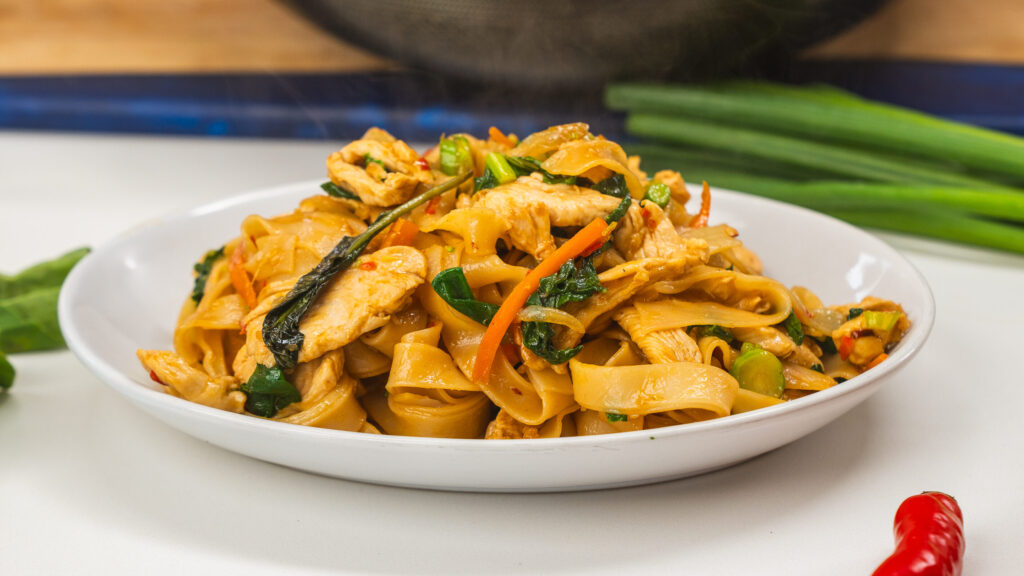
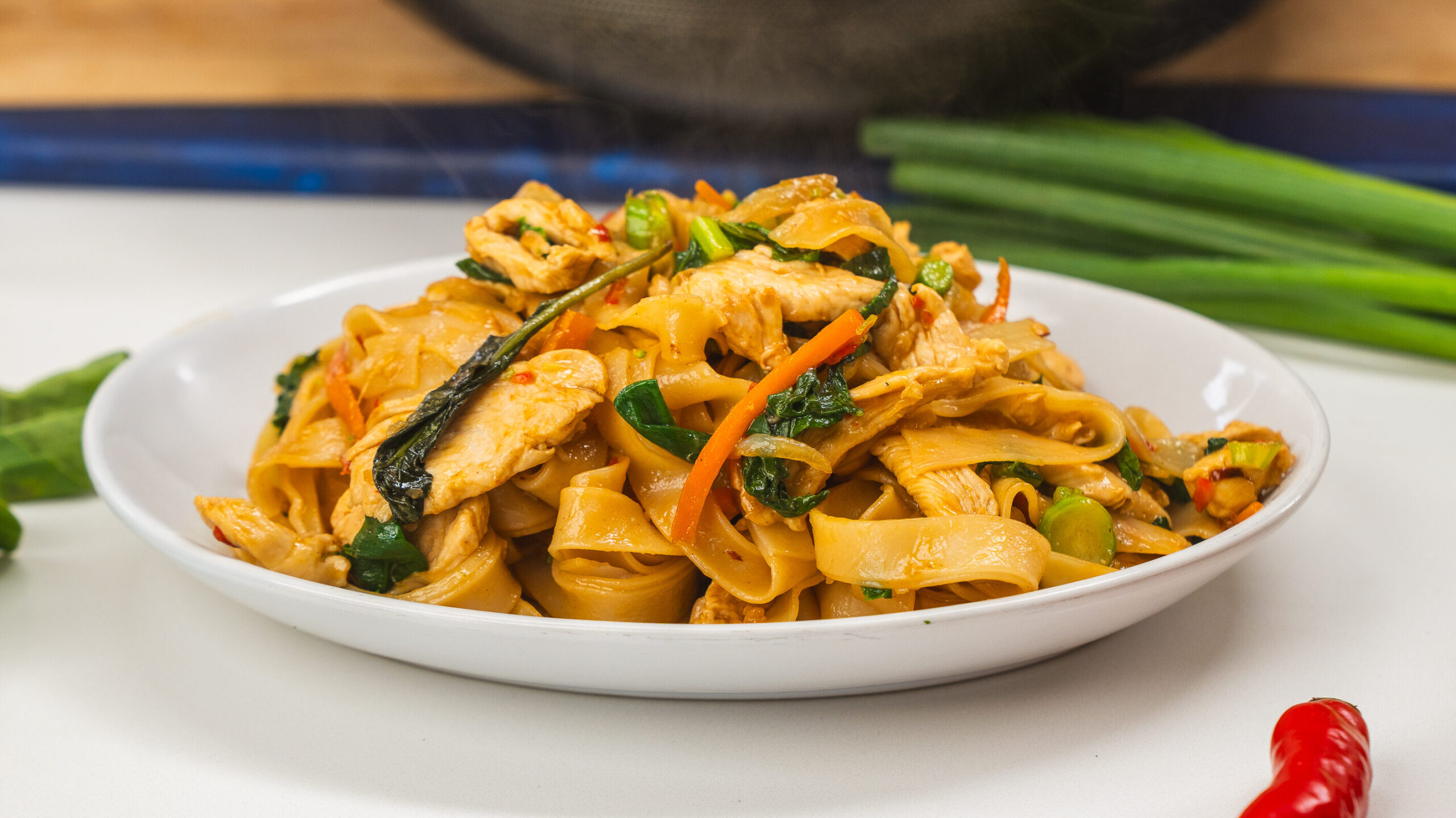
Let’s be honest—we all have that one Thai takeout order we rarely stray from. For me, it’s Thai drunken noodles. Spicy, savoury, a little sweet, loaded with chewy rice noodles, crisp vegetables, juicy chicken, and plenty of Thai basil—this is the kind of dinner that hits every corner of your taste buds.
The good news? You don’t need to wait for delivery. This Thai drunken noodles recipe, also known as Pad Kee Mao, comes together in one pan in about 20 minutes and is perfect for using up vegetables hanging around the fridge. The trickis high heat, a punchy sauce, and having everything prepped before you start. Fast, flexible, and big on flavour—exactly how weeknight dinner should work.
At a Glance
- Recipe: Thai Drunken Noodles (Pad Kee Mao)
- Ready In: About 20 minutes
- Cooking Style: Quick, high-heat stir-fry
- Protein: Chicken
- Noodles: Thick rice noodles
- Flavour: Savoury, sweet, spicy and herbaceous
- Best For: Fast weeknight dinners and using up vegetables
- One-Pan: Yes
- Easy to Customize: Swap the protein, vegetables or spice level
- Andy’s Tip: Prep everything before the pan gets hot. Once you start cooking, this dish moves fast.



Ingredients:
For the Sauce
- 5 tbs oyster sauce
- 5 tbsp soy sauce
- 1/2 tbsp sugar or maple syrup
- 1 tbsp water
For the Stir Fry
- 2-3 tbsp oil
- 4 cloves garlic, minced
- 1 Thai chili (optional)
- 1/2 white onion, sliced
- 2 chicken breasts, thinly sliced
- 2 tsp fish sauce
- 1 cup carrots, shredded
- 1 cup Chinese broccoli
- 3 green onions, cut into sticks
- 1 handful Thai basil
- Thick rice vermicelli noodles (like for pho)
Instructions:
- Boil a pot of water. Remove from heat, add noodles, soak 6 minutes, then drain.
- Heat oil in a large wok or pan over high heat. Add garlic and chili, cook 30 seconds.
- Add onion and chicken, stir-fry until chicken is cooked through.
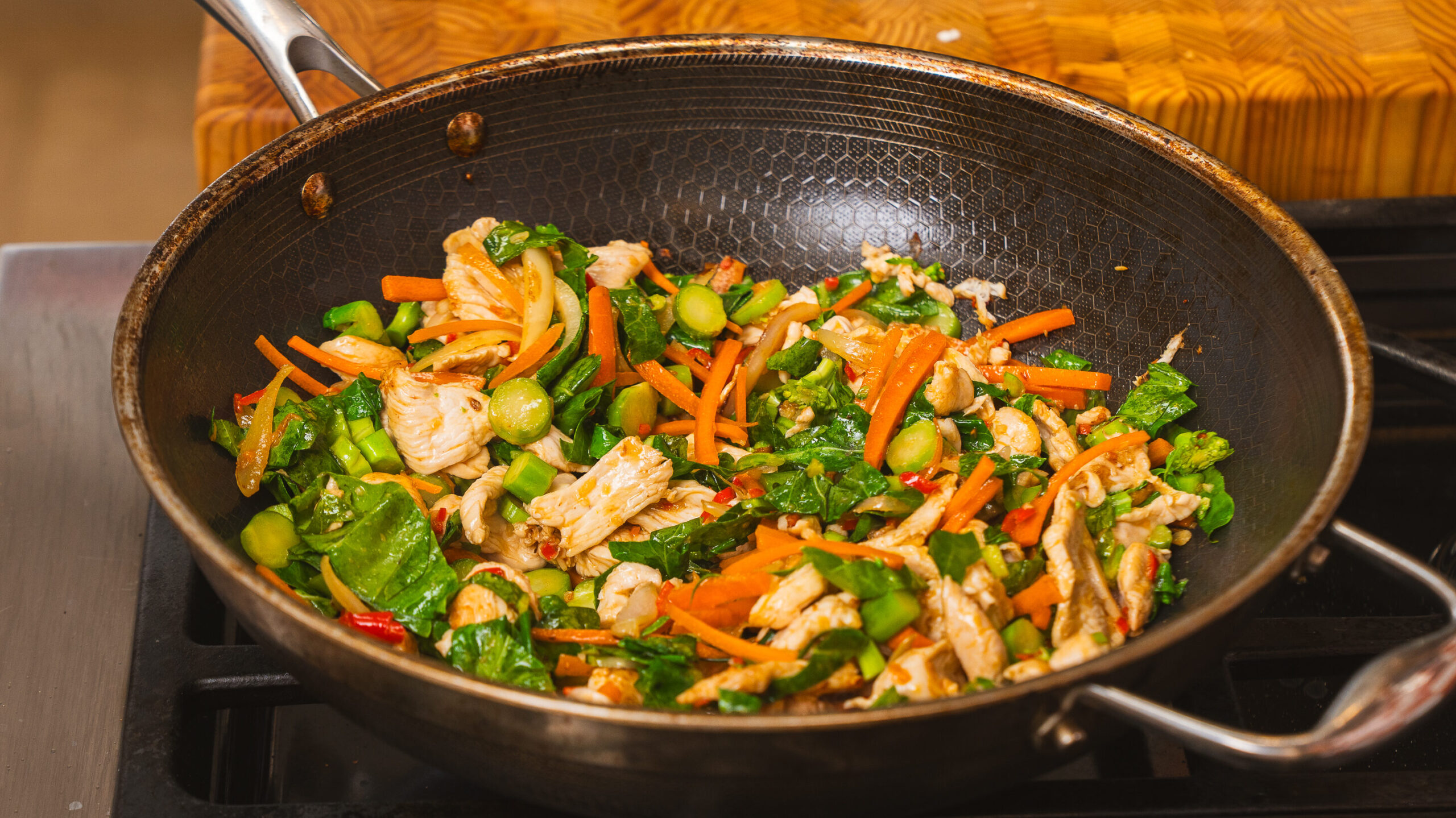
- Add fish sauce, carrots, Chinese broccoli. Stir-fry 2–3 minutes.
- Add drained noodles and prepared sauce. Toss everything together.
- Finish with green onions and Thai basil. Stir to combine and serve hot.
What Are Thai Drunken Noodles?
Despite the name, there’s no booze hiding in these drunken noodles.
Pad Kee Mao is a popular Thai noodle dish known for its chewy noodles, spicy-savoury sauce, vegetables and fragrant basil. There are different stories behind the “drunken” name, including its reputation as exactly the kind of spicy, satisfying food you might want after a night out.
In Thailand, Pad Kee Mao is traditionally associated with wide rice noodles and holy basil, which has a peppery, slightly spicy flavour. Depending on what’s available, you’ll also see versions made with Thai basil.
For my version, I’m using chicken, carrot and Chinese broccoli. But one of the reasons I love drunken noodles recipes is how flexible they are. Bok choy, bell peppers, mushrooms, cabbage or baby corn can all work as variations.
This is absolutely a clean-out-the-fridge dinner.
Why This Drunken Noodles Recipe Works
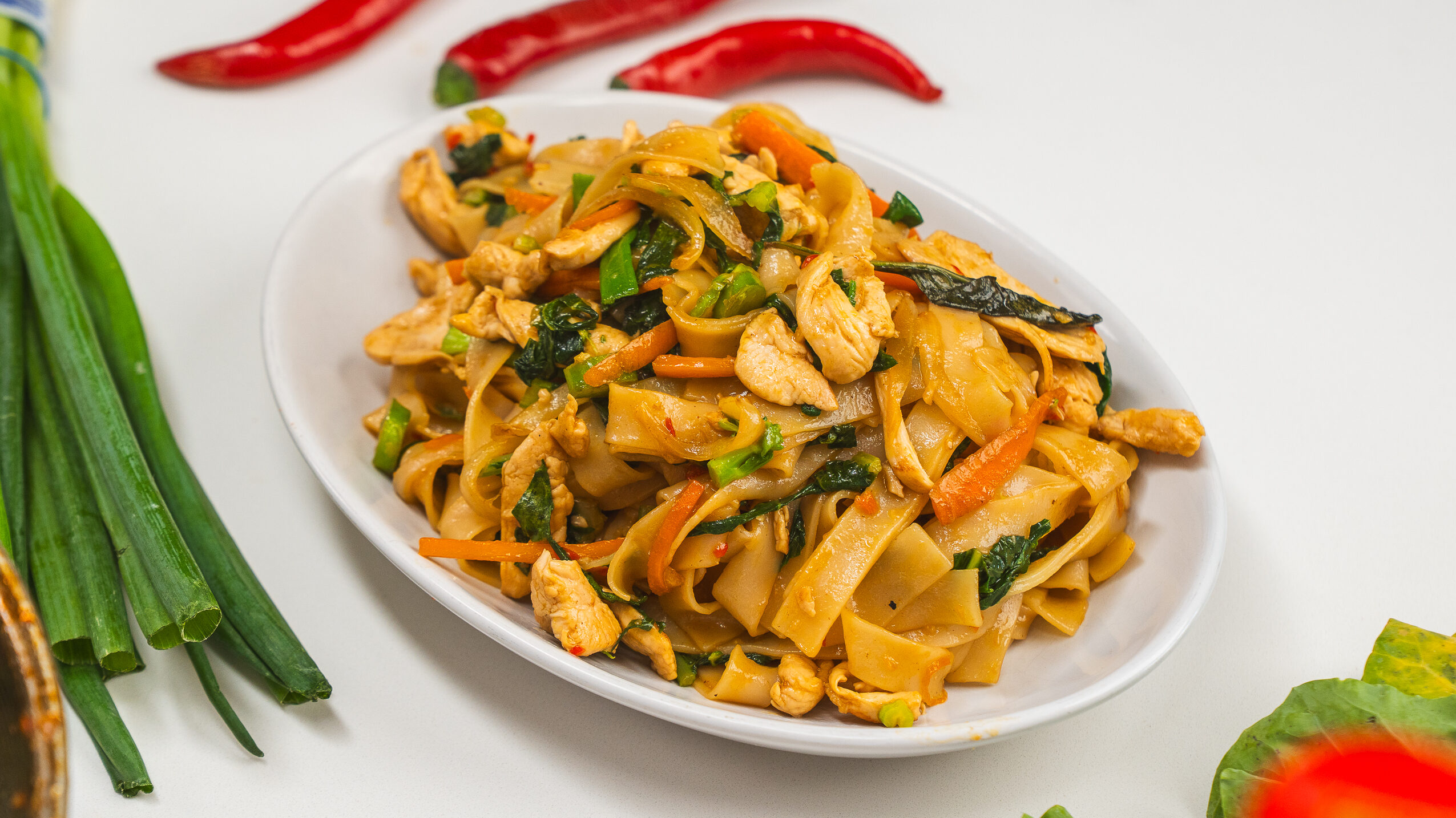
This drunken noodles recipe is on heavy rotation at our place. It’s fast, wildly flavourful, and easy to customize. There are a few reasons it works so well:
- The noodles: Thick rice noodles soak up that sauce while keeping the satisfying chew you want from good Thai stir-fries. I like soaking them in hot water instead of aggressively boiling them, which helps keep the texture in check.
- The sauce: Oyster sauce and soy sauce build that salty-savoury base, with sweetness to balance everything out. It’s a simple sauce, but once it hits a screaming-hot pan, good things happen.
- The aromatics: Garlic and Thai chili bring plenty of punch. Then Thai basil goes in toward the end for a fresh, fragrant finish.
- The protein: I’m using chicken breast sliced thin so it cooks quickly and stays tender. Tofu, shrimp or beef can work as variations if that’s what you have.
- The vegetables: Carrot and Chinese broccoli add freshness and texture without turning this into an all-day chopping situation.
The real trick is having everything ready before you turn up the heat. This recipe cooks quickly, so this is not the moment to start searching the fridge for your soy sauce.
Tips & Tricks to Nail This Thai Drunken Noodles Recipe
1. Get the pan properly hot.
High heat is one of the keys to great stir-fries. A wok or large pan gives the ingredients enough room to cook quickly instead of steaming. That little bit of char around the edges means flavour, folks.
2. Don’t skip the fish sauce.
Fish sauce brings salty, savoury depth that’s hard to replicate. It smells assertive straight from the bottle, but once it’s in the finished dish, it just works.
3. Soak, don’t overcook, the noodles.
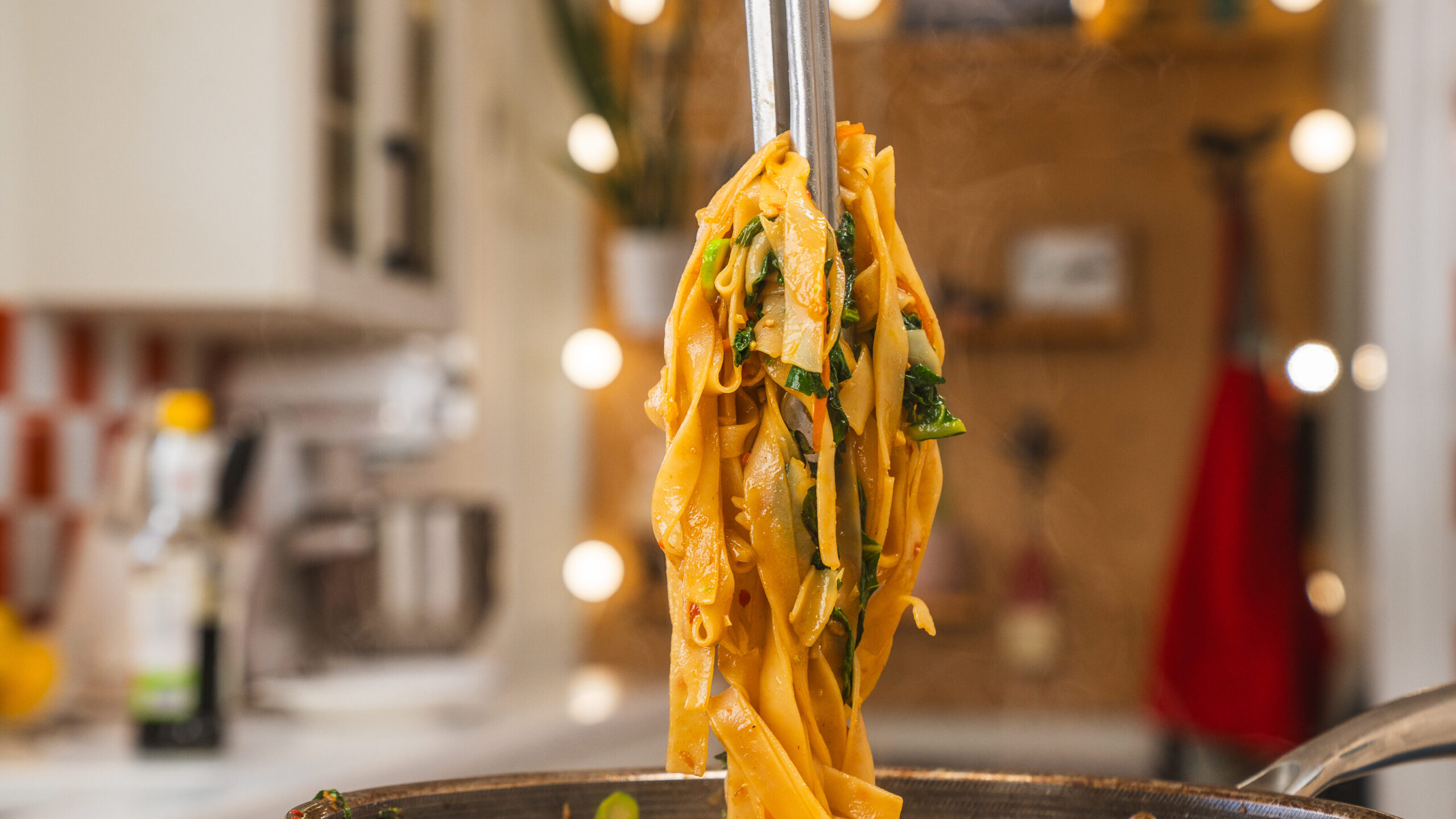
Rice noodles can go from pleasantly chewy to mushy surprisingly fast. Soak them in hot water according to the recipe, then let the final cooking happen in the pan with the sauce.
4. Add the basil at the end.
Whether you’re using Thai basil or holy basil, add those leaves near the end of cooking. You want them wilted and fragrant, not cooked into oblivion.
5. Use whatever vegetables you’ve got.
The original recipe uses carrot and Chinese broccoli, but snow peas, bell peppers, green beans, cabbage, bean sprouts or baby corn can all work as variations. Just keep the vegetables fairly thin so they cook quickly.
Make It Your Own
One of the things I love most about this Thai drunken noodles recipe is that you can follow the basic formula and still make it work with whatever is kicking around the kitchen.
- Spice level: Thai chilies bring legitimate heat. Leave them out for a milder version, or use sriracha or red pepper flakes as a variation.
- Protein: The original recipe uses chicken, but shrimp, beef or tofu are easy ways to switch things up.
- Vegetables: Stick with the carrot and Chinese broccoli in the original, or use other quick-cooking vegetables you already have.
- Vegan-friendly: Tofu can replace the chicken, but you’ll also need vegan alternatives to the fish sauce and oyster sauce. Those substitutions will change the original recipe.
- Gluten-free: Rice noodles themselves are naturally gluten-free, but check the labels on your soy sauce, oyster sauce and fish sauce to make sure the brands you’re using suit your dietary needs.
The Secret to Better Drunken Noodles at Home
Here’s the biggest trick I can give you: don’t treat this like a slow sauté.
Pad Kee Mao is a stir-fry, which means things need to move quickly. Have the sauce mixed, chicken sliced, vegetables chopped, noodles soaked, and basil ready before anything hits the pan.
Then get that pan hot.
Adding too many ingredients at once drops the temperature and can leave you with steamed vegetables and soggy noodles instead of that glossy, slightly caramelized finish you want.
And once the rice noodles go in, toss them gently. You want them coated in the soy sauce, oyster sauce, and all those pan juices without breaking them into little pieces.
Fast and hot. That’s the move.
If pan-fried noodles are your love language, try these Cantonese-style pan-fried noodles!
Thai Drunken Noodles FAQWhy are Thai drunken noodles called drunken noodles?There are several explanations for the name Pad Kee Mao, including its association with spicy food eaten alongside drinks or as a satisfying late-night meal. Despite the English name, alcohol isn’t required to make the dish.What is the difference between Pad Thai and drunken noodles?Pad Thai and Pad Kee Mao are different dishes. Pad Thai generally has a sweeter, tangier flavour profile and often includes peanuts, while drunken noodles are known for a spicier, more savoury sauce and fragrant basil.Are drunken noodles really spicy?They can be. Thai chilies can bring significant heat, but when you’re cooking at home you can adjust the amount to suit your preference.What kind of noodles are used for drunken noodles?Pad Kee Mao is commonly made with wide rice noodles. This recipe uses thick rice noodles that hold onto the sauce while giving the finished dish plenty of chew.Is Thai basil the same as holy basil?No. They are different herbs. Holy basil has a pepperier, spicier character, while Thai basil has a slightly sweet, anise-like flavour. Traditional versions of Pad Kee Mao may use holy basil, but Thai basil is a useful alternative when that’s what you can find.Can I make drunken noodles ahead of time?You can prepare the sauce and chop the chicken and vegetables ahead of time, but I prefer cooking the noodles right before serving. That’s when you get the best texture.What can I substitute for chicken?Shrimp, beef or tofu are all options. Just adjust the cooking time for whichever protein you choose.What vegetables go well in drunken noodles?
Carrots, Chinese broccoli, bok choy, bell peppers, cabbage, green beans, mushrooms, bean sprouts and baby corn can all work. The original recipe uses carrot and Chinese broccoli, so consider the others variations.
Why You’ll Keep Coming Back to This Thai Drunken Noodles Recipe
If you love Thai food, this one has a lot going for it: speed, big flavour and serious flexibility.
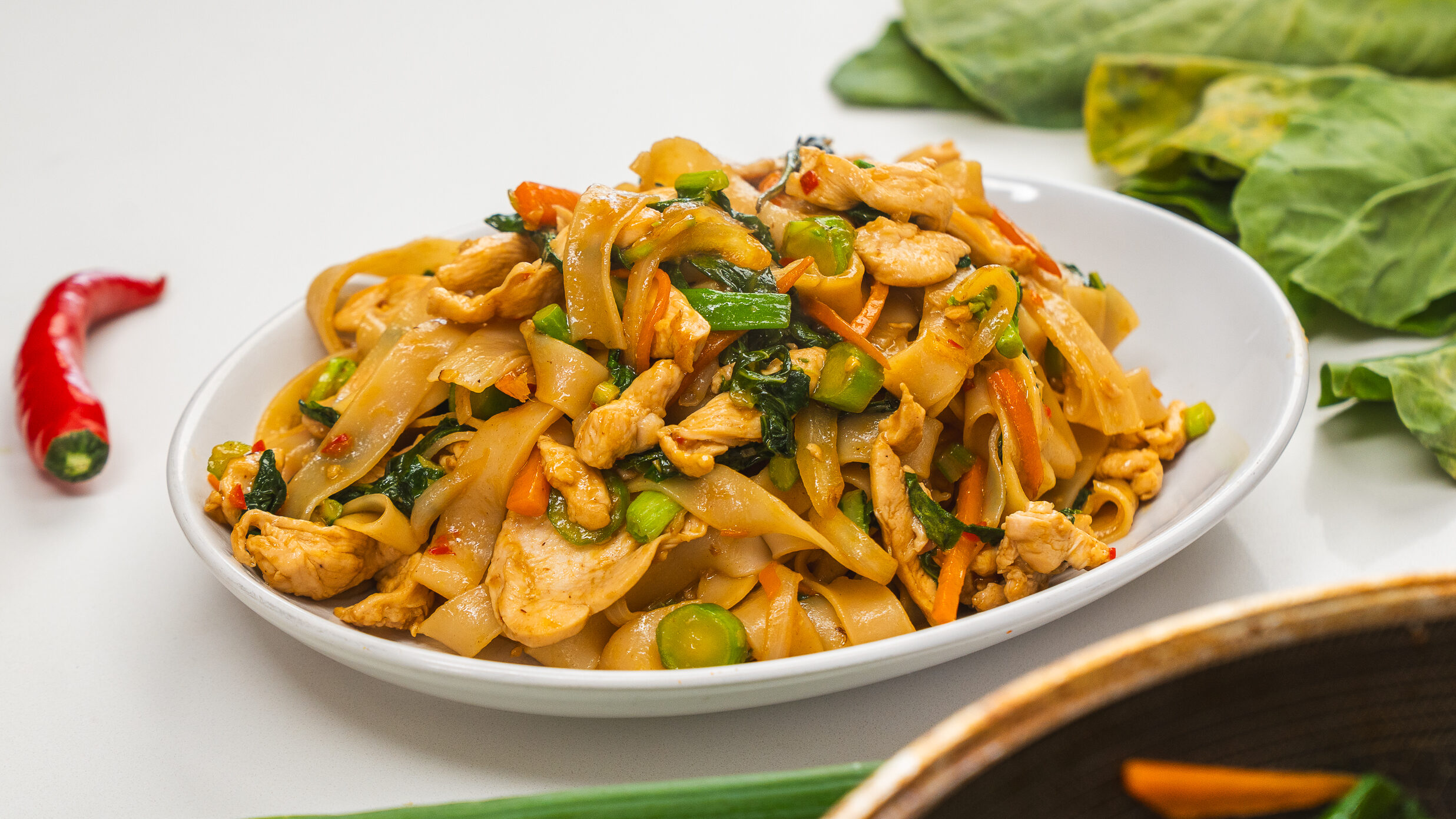
Once you’ve made this Thai drunken noodles recipe a couple of times, the process becomes second nature. Get the pan hot, cook the chicken and vegetables, add those chewy rice noodles and punchy sauce, finish with basil, and dinner is done.
Twenty minutes. One pan. A pile of saucy drunken noodles that scratches the takeout itch without waiting for someone to show up at your door.
That’s my kind of weeknight dinner.
Other Recipes You Will Love!
Andy Hay
Andy is the founder of ECK, Chef, and let’s admit it… the reason you’re here. He taught himself to cook, and it all paid off when he secured his spot in the season 5 Finale of Master Chef Canada. Now, Andy uses his big energy to showcase recipes that actually make people want to cook. His brand was built on butter and East Coast charm, and Andy’s kept that same energy ever since. Off-camera, you’ll find him doing what started it all: cooking for his two daughters, wife and the people he loves.
Similar recipes


Rate & leave a comment
21 Comments
— End of comments —
— No more comments to load —
Have not tried any yet but will be. Love that it is easy and quick plus health benefits.
Let us know what you think, Wanda!
Hey, my kids love this! Can you confirm the amount of oyster sauce.
Hi Amanda, it’s 5 tbsp!
What quantity of noodles?
Hi Janet, use about 400 g (14 oz) of dried thick rice noodles, which will make 4 generous servings!
This recipe for Pad Kee Mao is the bomb! Passes my restaurant test (if this were a restaurant I’d be back!). I made it with fresh wide rice noodles from my local Asian market and it was perfect! I used jalapeno instead of Thai chilis and used tofu in place of the chicken. My wife keeps asking me to make it again. Oh, and make sure to use the Thai Basil – that gives it real authentic Thai taste.
Love that it was a hit with the whole fam, Francis! Thanks for sharing!
When do you add the sauce?
Hi Mike, this is all listed in the steps. Let me know if you have trouble finding it.