
Homemade Bagels : Easy Techniques for Beginners


Founder / Chef / Everyone’s Best Friend
Andy Hay
Welcome to my kitchen. I hope to inspire you to grow as a home cook!
There’s nothing quite like enjoying fresh, warm homemade bagels right out of your oven. While bagels may seem intimidating at first, making them yourself is fairly easy! You just need to understand a few key techniques. With a solid homemade bagel recipe you can enjoy chewy, flavorful bagels that would impress any baker.



Ingredients:
Dough Recipe
- 2 tsp dry active yeast
- 1 tbs sugar
- 1 cup plus 5 tbs warm water
- 3 cups all purpose flour
- 2 tbs olive oil
- 1 tsp salt
Water Bath
- 1 tbs sugar
- 2 tbs baking soda
- 10 cups water
Bagel Topping
- 1 egg scrambled in bowl for egg wash
- 1/2 cup sesame seeds
- 1/2 cup everything bagel seasoning
- 1/2 cup caraway seeds
Instructions:
- Into a bowl add in the yeast, sugar, and water. Give a stir and let the mixture rest in a cosy spot in your kitchen for around 10 minutes or until the mixture gets nice and frothy.
- While the yeast is activating, grab a large bowl and mix together the flour, salt, and oil. Once the yeast mixture is frothy, pour it into the flour mixture and mix with a wooden spot or your hands until a shaggy dough forms.
- If you have a stand mixer, you can drop the shaggy dough into the mixing bowl, attach the machine with the dough hook attachment turn the mixer on high for 8-10 minutes. If you do not have a mixer, simply pour dough onto the counter and work with your heal of your palm. Really take out some frustration here. You want to dough to be smooth. If the dough feels too wet, add a sprinkle of flour. Too dry, wet your hands slightly under the tap and work the dough. It's a feel thing that you will develop. Do not rush this process. It will take about 10 minutes.
- Once dough is smooth, form into a ball and place into a lightly oiled bowl. Cover with plastic wrap or a tea towel and let it rest in a cosy spot in your kitchen until it doubles in size.
- Once dough has doubled in size, remove plastic wrap or tea towel and punch the air out of the dough. Cut the dough into 8-10 pieces and form into dough balls. At this point, I like to cover the dough balls with a tea towel and allow them to rest for 20 minutes.
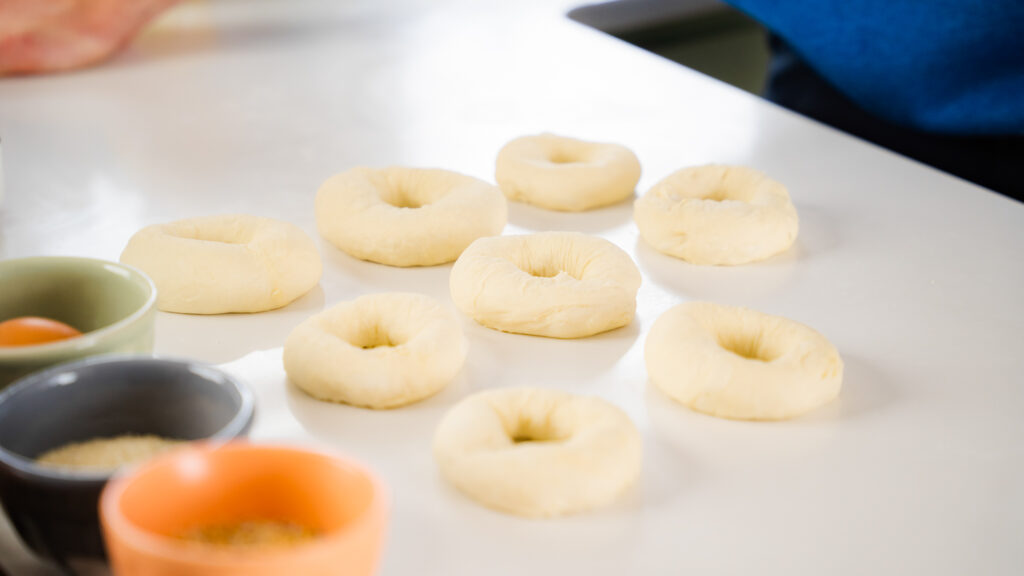
- After the 20 minutes, lightly flour your thumb and push it through the centre of each dough ball. Then using two fingers, gently stretch a 1 inch hole into the bagel.
- Now that all of the bagels are shaped, place a large pot over high heat and add in the water, sugar, and baking soda. Bring to a rolling boil.
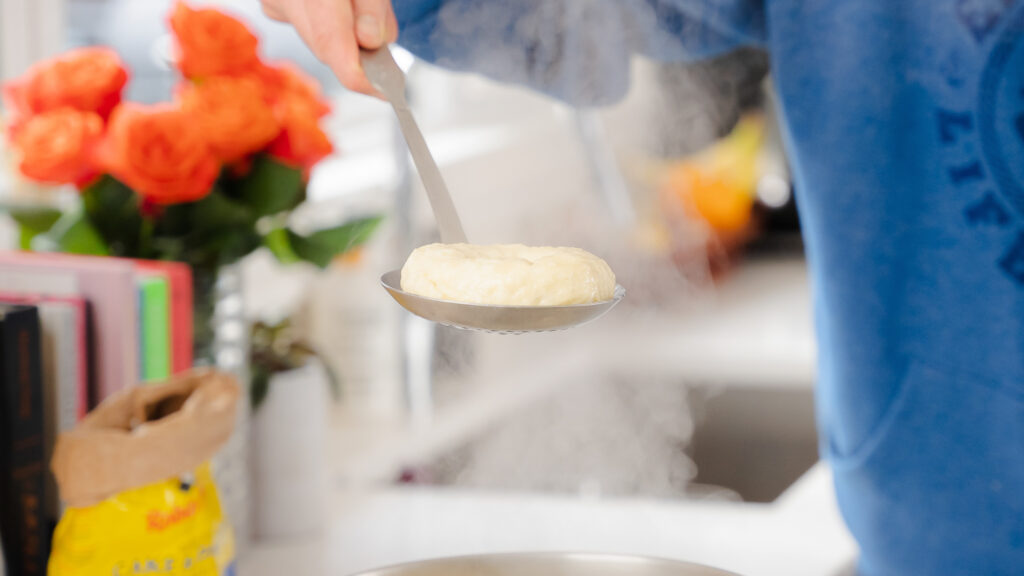
- Once boil has been reached, gentle drop bagels into the pot. No more than 3 at a time as we don't want the temperature of the water to drop too much. Boil bagels for 1 minute per side, then remove from water.
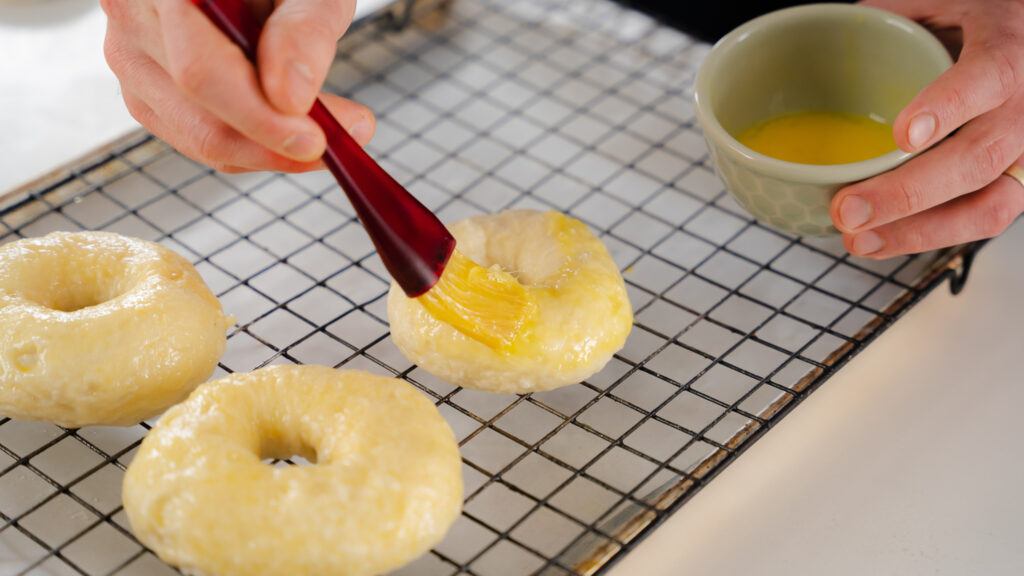
- Once all bagels have been boiled, brush on egg wash. Make sure to get all the nooks and crannies of the top side of the bagel.
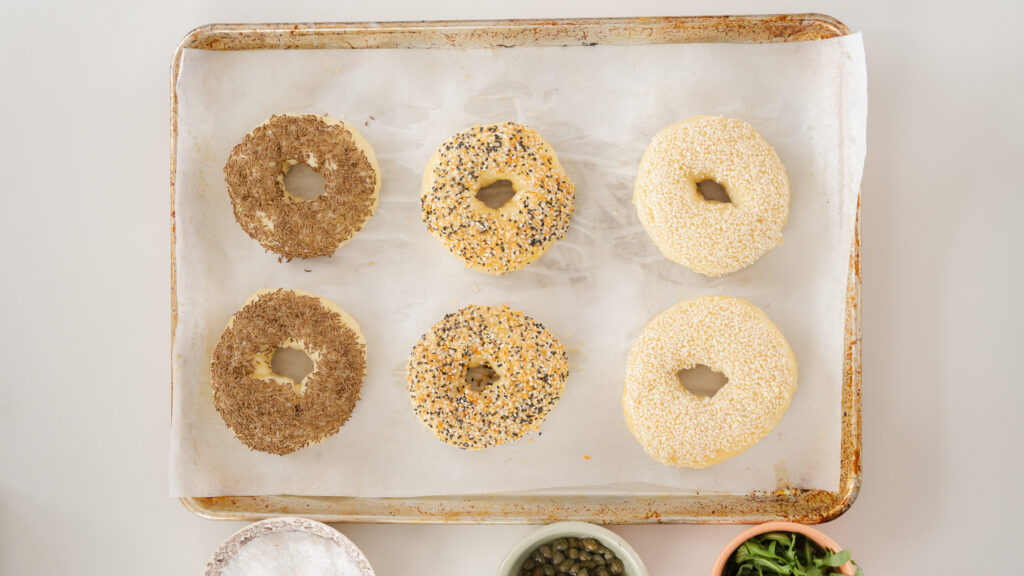
- Now it's time for seasoning. I like to pour my seasoning onto a small plate and then place the egg washed side of the bagel down onto the season. This ensures maximum coverage.
- Preheat oven to 465F and place bagels on parchment lined baking sheets.
- Bake for 20 minutes or until the bagels are a deep golden brown.
- Remove from oven and allow to cool. Take a moment, look at yourself in the mirror and give yourself a thumbs up. You just made bagels from scratch!!! Not many people can say that!
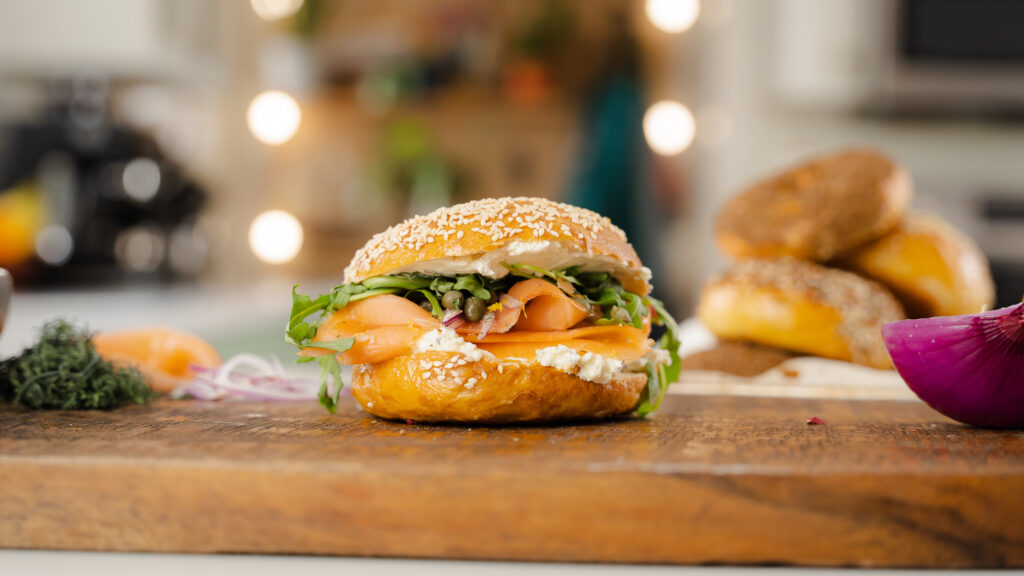
Why Homemade Bagels Are Worth the Effort
Bagels have a unique texture and taste that comes from the combination of boiling and baking. The chewy interior, golden brown crust, and slightly glossy finish are hallmarks of a great bagel. By following a homemade bagel recipe, you get complete control over the ingredients. Bread flour, yeast, salt, honey, and any additional toppings like poppy seeds or sesame seeds. Plus, nothing beats the aroma of freshly baked bagels filling your kitchen.
Even if you’ve never tried making bagels before, the process is easier than it seems. With a large bowl, a stand mixer (or just strong hands), and a little patience, you can mix, knead, and shape your bagel dough to perfection.
The Importance of Yeast and Bread Flour
The foundation of any bagel is the dough. The two main ingredients are bread flour and yeast. Bread flour provides the high gluten content needed for chewiness. Yeast acts as the leavening agent, helping the bagel dough rise properly. For this homemade bagel recipe, you can use either active dry yeast or instant yeast. Active dry yeast whisks into warm water to be dissolved before adding to the dough. Instant yeast can be mixed directly into the flour. Either option works beautifully, as long as your room temperature ingredients allow the yeast to activate.
Kneading the dough with a stand mixer or by hand develops the gluten, giving your bagels that signature texture. After kneading, portioning the dough into equal balls ensures uniform bagels. Using a kitchen scale or eyeballing roughly equal pieces both work fine. Letting the dough rest in an oiled bowl with a towel on top for a short bench rest helps relax the gluten. This makes shaping easier.
Shaping Your Bagels
Shaping homemade bagels can be fun and creative. Once your dough balls have rested, poke a hole through the center with your thumb. Then, gently stretch the dough to create a consistent ring. The goal isn’t perfection—every bagel will have its own personality. Using an oiled work surface prevents sticking and makes handling easier.
Boiling: The Secret to Bagel Texture
Boiling is a defining step in this homemade bagel recipe. A large pot of water is brought to a boil, and baking soda or honey is added to the water. But what does boiling dough in baking soda do? It strengthens the outer layer of the bagel, giving it a firm, shiny crust once baked. It also encourages browning in the oven. That’s how to get that golden brown appearance we associate with traditional bagels.
Some bakers wonder, “Is it better to boil bagels in honey or baking soda?” Both have benefits. Baking soda produces a classic chewy crust and helps with browning. Boiling with honey adds a touch of sweetness and extra flavor. You can even combine both for a slightly sweet, rich crust. Each bagel only needs a minute or so on each side in the boiling water. This quick bath is what differentiates bagels from ordinary bread rolls.
Using a slotted spoon or skimmer makes transferring the bagels from the boiling water to the baking tray much easier. After boiling, allow the bagels to rest on a wire rack or a parchment-lined tray. I do this to drain any excess water before adding toppings.
Adding Flavor and Toppings
The flavor of homemade bagels is not only in the dough but also in the toppings. Brushing the bagels with an egg wash ensures the toppings stick and enhances the golden-bagel finish. Some classic toppings are: sesame seeds, poppy seeds, or bagel seasoning. You can even get creative with combinations like everything bagels, incorporating sea salt, brown sugar, and other spices.
If you prefer, a light sprinkle of kosher salt or a dash of barley malt syrup can add depth and character to your bagels. For a classic touch, a few heaping teaspoons of cream cheese and some salmon is my go-to accompaniment, but feel free to experiment with other spreads or toppings.
Baking Homemade Bagels
Once boiled and topped, the bagels head into a preheated oven. A hot oven ensures the bagels get a firm crust while retaining a chewy interior. Baking sheets lined with parchment paper or lightly greased with butter prevent sticking. Depending on your oven, using a sheet pan or baking tray can make a difference in how evenly the bagels bake.
Pay attention to the bake time—bagels should come out golden brown, with a firm exterior that gives slightly under gentle pressure. Removing them to a wire rack to cool for about 10 mins helps maintain texture and prevents sogginess on the bottom.
Tips for Perfect Homemade Bagels Every Time
- Uniform Portions: Dividing the bagel dough evenly ensures consistent baking results.
- Water Temperature Matters: Using warm water (not hot) when activating yeast ensures proper fermentation without killing the yeast.
- Egg Wash for Shine: Brushing the bagels with egg wash before toppings gives a glossy, golden finish.
- Boiling Bath Enhancements: Adding baking soda, honey, or both to boiling water enhances crust, flavor, and color.
- Resting Your Dough: Allowing your dough balls to rest on a work surface or in an oiled bowl improves elasticity and chewiness.
Storing and Reheating Bagels
Homemade boiled bagels are best enjoyed fresh, but you can store leftovers in an airtight container at room temperature for a couple of days. For longer storage, freeze in batches, separated by parchment paper, and toast or warm as needed. Reheating in the oven or toaster brings back the original texture and flavor, almost like they just came out of the oven.
Give it a Whirl!
Making homemade bagels is a satisfying process that combines simple ingredients with a few special techniques. From mixing the bread flour and yeast to boiling in a water bath and baking to golden perfection, each step contributes to the distinctive chewiness, flavor, and texture. Whether you stick to classic toppings like sesame seeds and poppy seeds, or get creative with bagel seasoning, homemade bagels are a versatile treat worth mastering.
With practice, you’ll find your favorite combinations, perfect your portion sizes, and enjoy the fun of making bagels from scratch. Remember, the oven, the boiling water, and the toppings all work together to produce bagels that look as good as they taste. So grab your stand mixer or large bowl, mix up a batch, and enjoy the delicious reward of homemade bagels straight from your kitchen.
Other Recipes You Will Love!
Andy Hay
Andy is the founder of ECK, Chef, and let’s admit it… the reason you’re here. He taught himself to cook, and it all paid off when he secured his spot in the season 5 Finale of Master Chef Canada. Now, Andy uses his big energy to showcase recipes that actually make people want to cook. His brand was built on butter and East Coast charm, and Andy’s kept that same energy ever since. Off-camera, you’ll find him doing what started it all: cooking for his two daughters, wife and the people he loves.
Similar recipes


Rate & leave a comment
2 Comments
— End of comments —
— No more comments to load —
Great bagel recipe. When I googled if I should let them rest after shaping, before boiling, your recommendation was yes but in you recipe it goes from shaping right in the water. Im confused.
Hi Judy, it’s the dough balls that rest for about 20 minutes!